Order by 1 December for guaranteed Christmas delivery · Eligible Melbourne metro · In-stock orders only


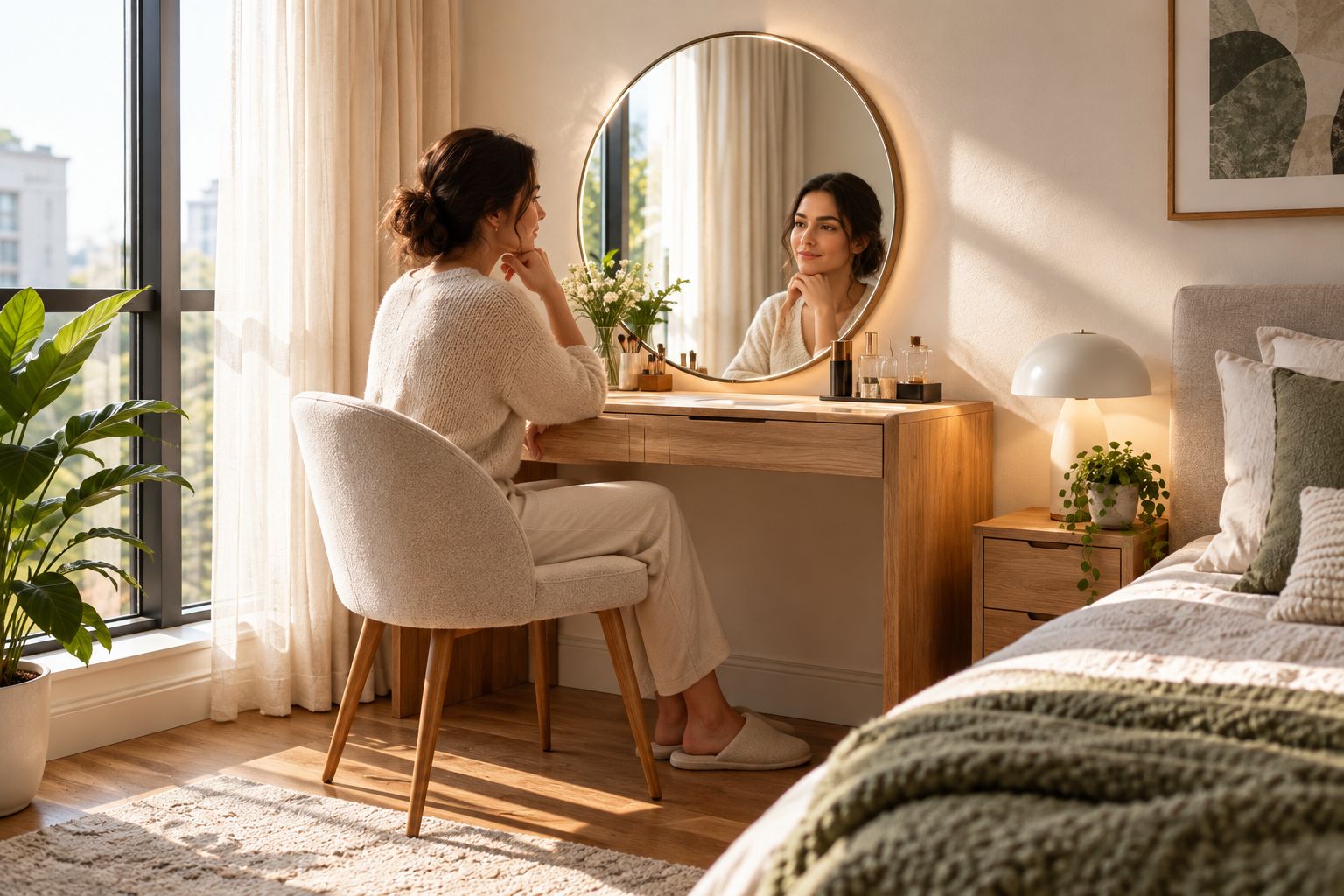
Instead of shifting a mirror around every morning to escape shadows, position your vanity so soft light reaches your face from in front, then check the mirror at your normal seated height. If you're deciding where to position a vanity mirror on a bedroom wall, test the light and seating position before drilling or committing to furniture placement.
A mirror reflects the lighting you give it. A bright bedroom still produces an awkward makeup spot if the window is behind you or the only light sits overhead.
For parents shopping for makeup vanity tables in Australia in 2026, room placement belongs on the gift checklist before styling. A beautiful setup needs a comfortable seat, usable light and enough space to open drawers without blocking the bedroom.
Vanity Vault is a fit for parents shopping for makeup vanity tables and Hollywood mirrors. Start with the available space, then browse Vanity Vault with your measurements beside you. Treat the table, mirror and seating as separate items unless the chosen listing explicitly includes them together.
You do not need to reveal the entire gift to get useful measurements. Ask where the recipient normally sits to get ready, or measure an existing comfortable setup with their permission.
Expected result: you can see your face without squinting, and neither side disappears into a strong shadow.
A wall beside a window often offers a workable furniture layout, but side light needs checking. If one cheek is much brighter than the other, reposition the setup or add suitable front-facing light rather than accepting the shadow.
These are layout choices, not product rankings. Each has a useful role and a limitation.
| Position | Best for | Advantage | Limitation and next move |
|---|---|---|---|
| Facing soft window light | Daytime makeup routines | Light reaches the face from in front | Keep the mirror from obstructing the window; control direct sun |
| Beside a window | Bedrooms with a usable side wall | Leaves the window area accessible | Side light creates uneven shadows; test front-facing fill light |
| On an internal wall | A consistent evening setup | Furniture placement is less dependent on the window | Needs suitable task lighting rather than ceiling light alone |
| With the window behind the seat | Rooms with restricted layouts | Uses an otherwise workable wall | Backlighting leaves the face shaded; test front-facing light before committing |
Choose the position that lights the face, not simply the wall that looks most symmetrical. A centred mirror above a table is a styling choice; clear visibility is the functional test.
Expected result: the recipient can see their face without lifting their chin, hunching or repeatedly moving the chair.
There is no single correct floor-to-mirror measurement for every bedroom. Seat height, tabletop height, mirror shape and the user's height all affect the answer. For a 2026 gift, record the actual seated position instead of copying a measurement from a styled room photo.
Move the chair back as you would when standing up. Open each accessible drawer and the bedroom door, then check that another person can use the normal walking route without stepping over cables.
Measure these clearances in centimetres and keep them with the product dimensions. Do not substitute a generic spacing rule for a real room test: a cupboard door or bed corner changes what works.
For a child's bedroom, follow the furniture manufacturer's anchoring instructions and choose a location that does not encourage climbing to reach the mirror. A mirror must not rely on an improvised lean against the wall for security.
Expected result: the setup works in both daytime and evening conditions, with secure installation and an unobstructed route around it.
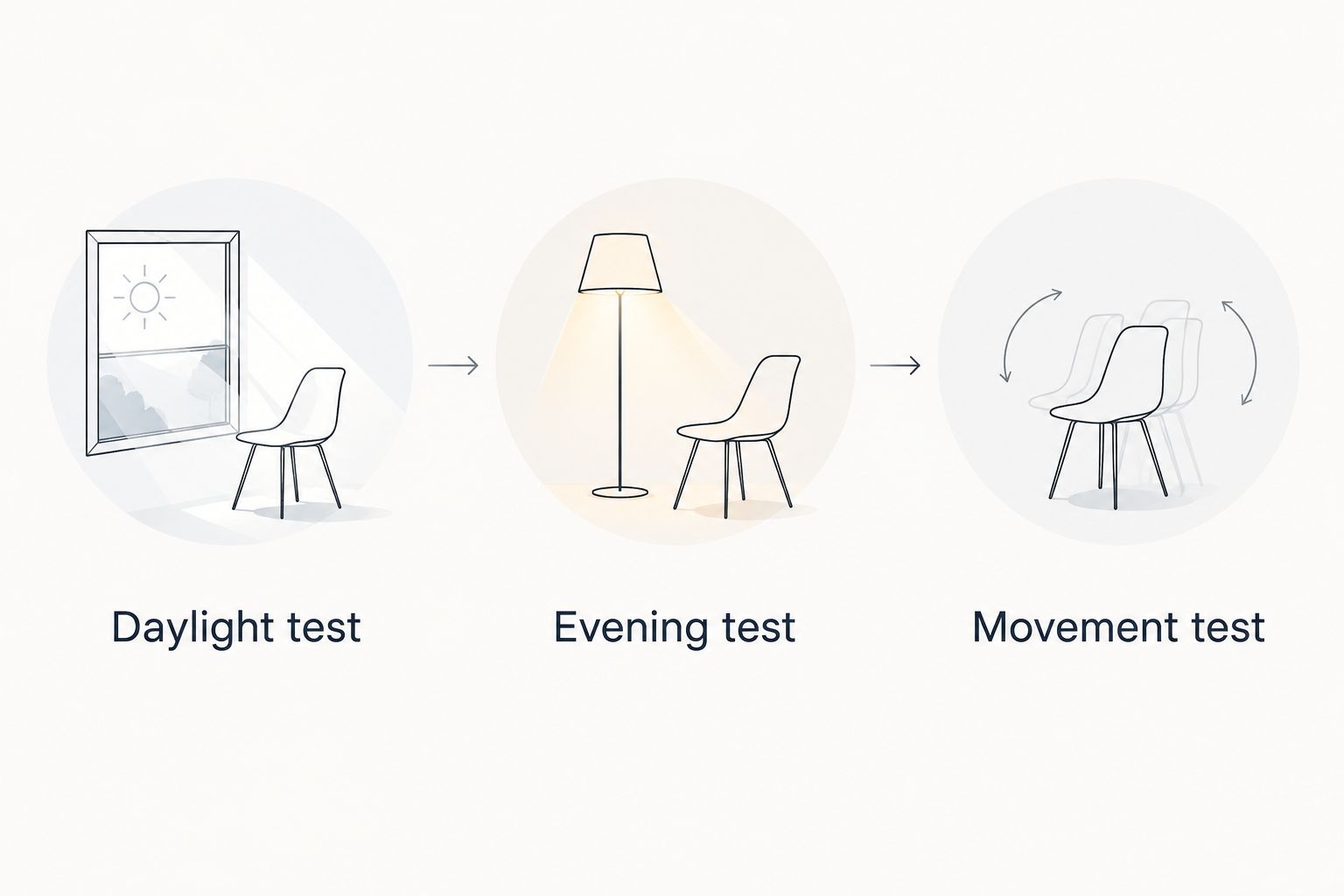
Use these 3 checks—daylight, evening and movement—as your 2026 setup record. A few notes about what changed are more useful than a photograph taken only when the room looks its brightest.
If your mirror has adjustable lighting, use only the controls and settings described in its instructions. Start with a comfortable level that lets you see detail without glare; do not assume maximum brightness gives the most useful reflection.
Where the mirror has no lighting, assess a suitable separate task light. Position light to illuminate the face rather than shine into the eyes or create a bright reflection in the glass. Keep lamps stable and follow their clearance instructions.
Do not add an unsupported electrical accessory to solve a placement problem. Moving the chair or table first is a simpler check than buying another item for an untested position.
An internal wall is a practical alternative when the window wall is occupied by a bed, wardrobe or doorway. Best for evening routines, this layout needs its own front-facing light; ceiling light alone is a poor substitute. Its advantage is a fixed furniture position, while its limitation is reliance on artificial lighting.
Keep the same seated-height and clearance checks. Then test the proposed task lighting with the ceiling light both on and off, noticing whether overhead shadows remain under the brows and chin.
For parents considering a Hollywood mirror in 2026, check its stated lighting features, power requirements and permitted installation method before choosing the wall. Do not assume every mirror offers brightness adjustment, colour settings or wall mounting.
A separate mirror also needs to suit the table beneath it. Check the full dimensions and any required base or mounting space rather than judging compatibility from a photograph.
Strong side light is reaching the face unevenly. Turn the seating direction towards softer front light where practical, or test suitable front-facing task lighting. Recheck after adjusting blinds because the balance changes with daylight.
A window or lamp behind you is creating a bright background without lighting your face. Change the seating direction or introduce light from in front. Increasing a ceiling light does not correct its direction.
The reflective area is poorly aligned with the seated position. Repeat the height test with the actual chair before moving the mirror. Check whether the chair itself is forcing an awkward posture.
Diffuse the sunlight with an appropriate blind or curtain, or choose another position. Avoid placing magnifying mirrors in direct sunlight and follow their safety instructions. Do not use a temporary angle adjustment that leaves the mirror unstable.
Revisit the furniture footprint rather than squeezing the route tighter. Move the setup closer to an appropriate power point where practical, without stretching the lead. If the layout still obstructs normal movement, choose another wall or reassess the furniture size.
Build the gift around how the recipient gets ready, not around accessories alone. Someone using the vanity before school needs the morning light checked; someone using it after dark needs the evening setup tested properly.
For a 2026 purchase from Vanity Vault, make a short checklist of the selected listing's dimensions, stated materials, inclusions and assembly requirements. Confirm whether the mirror and seat are included or separate. Assess durability from documented construction and care instructions, not from decorative details or a product name.
Value comes from suitability and confirmed inclusions. Design appeal matters too, but a finish the recipient likes does not solve an uncomfortable viewing height or an unsuitable wall.
Where should I position a vanity mirror in a bedroom?
Position a vanity mirror where soft light reaches your face from in front and the reflective area works at seated height. Test the chair position, glare and walking clearance before securing the setup.
Should a vanity mirror face the window?
Facing soft window light is a useful starting point because it illuminates the face from in front. Keep the mirror from blocking the window and diffuse direct sunlight with a suitable curtain or blind.
Can I put a makeup vanity beside a window?
Yes, but check for uneven shadows across the face. A side-window position needs adjustment or suitable front-facing task lighting when one side looks noticeably darker.
How high should I hang a bedroom vanity mirror?
Set the mirror height using the intended user's seated viewing position, not a universal floor measurement. Check that the reflective area shows the face without chin lifting or hunching, and confirm that the mirror permits wall mounting.
Is a ceiling light enough for a makeup vanity?
A ceiling light alone often casts shadows beneath the brows and chin. Test suitable light from in front of the face, especially when the vanity will be used after dark.
Can every Hollywood mirror be mounted on a bedroom wall?
No; use wall mounting only when the specific mirror's instructions permit it. Confirm the wall construction and appropriate fixing method before installation, and seek qualified help if either is unclear.
What should parents check before buying a vanity as a gift?
Check the room measurements, seated viewing height, lighting and the selected listing's inclusions. Confirm dimensions, assembly requirements and whether the mirror and seating are separate before ordering.
The right mirror height starts with the seat. If the chair changes after installation, repeat the viewing test before assuming the mirror needs moving. The whole setup works together; one comfortable seated trial is more useful than choosing a wall position by appearance alone.
